
Educational Technology (EdTech)
Discover our school's EdTech vision, mission and curriculum approach, and how we partner with parents to nurture self-directed, responsible and future-ready digital learners.
Vision
Self-directed and future-ready responsible digital learners
Mission
Purposeful and meaningful use of technology in Teaching and Learning to nurture E21CC future-ready learners
Message from HOD ICT
Mdm Chen Jing Ting
I believe in the purposeful and meaningful use of technology to enhance teaching and learning, while nurturing pupils to become self-directed, responsible and future-ready digital learners. Achieving this requires a collective effort to develop a coherent digital literacy curriculum, integrate EdTech meaningfully into teaching and learning, and provide a reliable and supportive digital learning environment.
To realise this vision, I seek to provide direction, build capacity and foster collaboration among teachers to explore, adopt and refine effective EdTech practices. By cultivating a culture of innovation, collaboration and continuous learning, we empower teachers to design meaningful learning experiences that equip pupils with the competencies and dispositions to thrive in an increasingly digital world.
Curriculum Framework
Our EdTech Focus
Guided by MOE's Transforming Education through Technology Masterplan 2030, our EdTech Committee is committed to developing pupils' digital literacy and technological skills, enriching teaching and learning through the purposeful use of technology, and promoting safe and responsible digital practices.
Our approach focuses on three key areas:
1. Digital Literacy & Technological Skills
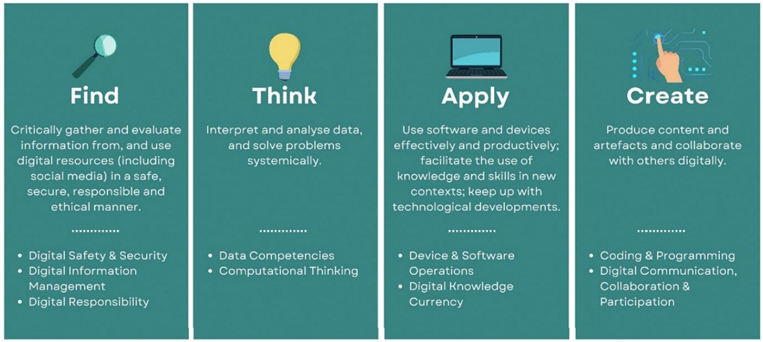
Aligned with the Find, Think, Apply, Create (FTAC) framework, our programme nurtures pupils to become confident, critical and responsible users of digital technologies. Through opportunities to find and evaluate information, apply digital tools and create meaningful digital content, pupils develop the skills to learn independently, collaborate, solve problems and express their creativity in a digital world.
2. Integrating EdTech to Enrich Teaching and Learning
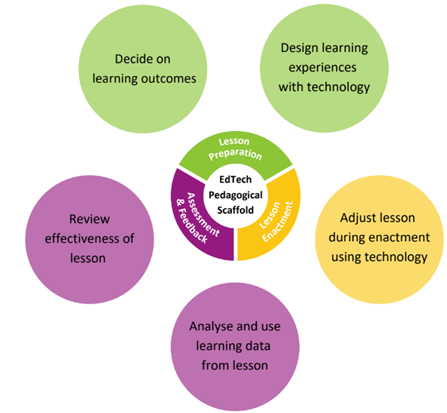
Through professional learning and collaboration, our teachers design technology-enhanced lessons that promote active, interactive and collaborative learning. Guided by e-Pedagogy and the EdTech Pedagogical Scaffold, teachers integrate EdTech purposefully to create engaging, student-centred learning experiences that cater to diverse learning needs. Digital tools also support teachers in gathering evidence of learning and providing timely, targeted feedback to help pupils improve.
3. Cyber Wellness
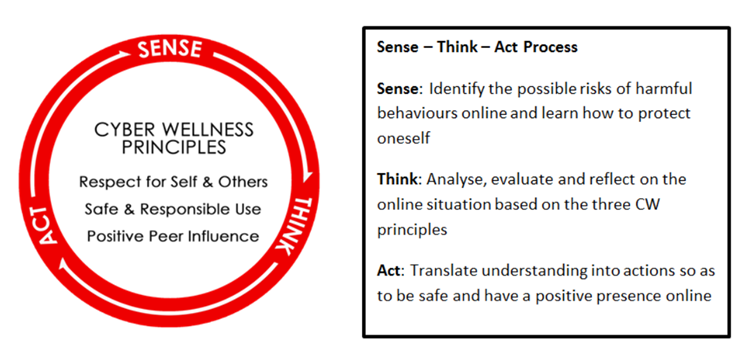
We prioritise the well-being of our pupils in the digital realm. Our Cyber Wellness programme uses the Sense-Think-Act approach to develop a child’s instinct to act responsibly in cyberspace. This approach is grounded in three guiding principles:
Respect for Self and Others: Developing an understanding of the impact of online actions and recognising the importance of respecting oneself and others in the digital space.
Safe and Responsible Use: Reflecting on how to use technology safely, responsibly, and ethically, while safeguarding personal information.
Positive Peer Influence: Encouraging pupils to make responsible decisions and influence their peers to contribute positively to the online community.
Through engaging activities and lessons, we equip pupils with the knowledge and skills to navigate the internet safely and responsibly. They learn to be ethical, responsible users of technology, fostering a safe and positive online environment. Our cyber wellness education also helps pupils develop self-management skills, enabling them to make informed decisions and maintain a healthy balance in technology use.
Partnership with Parents
We believe that a strong partnership between school and home is essential in nurturing responsible digital learners. Through the sharing of resources, information and learning opportunities, we support parents in guiding their children towards safe, responsible and balanced technology use.
We encourage parents to take an active interest in their children's digital learning experiences, establish healthy digital habits at home and engage in regular conversations about cyber wellness. Together, we can create a positive and supportive digital learning environment for our pupils.